Guide
What to put a pizza oven on: tables and stands
Published
Note: This page contains affiliate links. If you buy through them we may earn a commission at no extra cost to you. Learn more
In short
Put a portable pizza oven on a sturdy, level, non-combustible surface such as a stainless steel table, stone, brick or concrete, at roughly kitchen worktop height so you can launch and turn pizzas comfortably. Keep it clear of fences, sheds and overhanging branches. Maker tables and stands from brands such as Ooni and Gozney are designed around their ovens, so check the maker's fit list before buying.
Products for this job
Compare all 6 productsJamie Oliver by Tefal gas oven: 58.3 x 45 cm, 10.9 kg
Check price on AmazonAffiliate linkNinja Artisan: electric, no flame, 59 x 42 cm
Check price on AmazonAffiliate linkNutriChef 30.48 cm gas oven: just 31.5 cm wide
Check price on AmazonAffiliate link
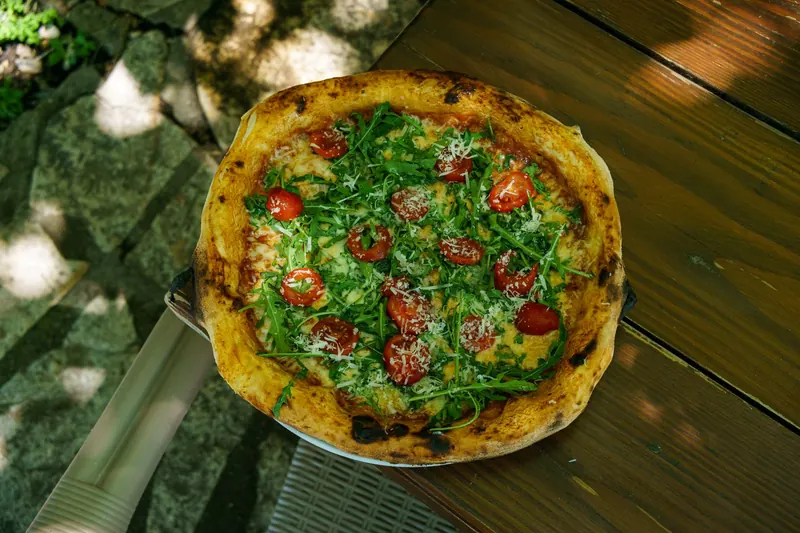
A portable pizza oven sits on legs only a few centimetres high, and the underside can get very hot. That makes the surface beneath it important for both safety and comfort. A wobbly garden table, a plastic top or a spot under a tree can turn a good evening into a hazard. This guide covers which materials are safe, what height makes launching easier, how much space to leave around the oven, and what to look for in a dedicated table, stand or cart.
Choose a heat-proof, stable surface
The oven's base and legs carry heat downwards, and embers or hot fuel can drop from a wood or pellet oven. The surface needs to be non-combustible and able to cope with heat without cracking, warping or scorching. Stainless steel tables, stone, brick, concrete and heavy-duty ceramic tiles are the usual choices.
Avoid plastic, resin, glass tops and untreated wooden tables unless the maker says otherwise, and never put an oven on a wooden deck without a heat-proof base underneath. The table must be level and solid, because a heavy oven with a long peel being pushed in and out can tip a light table. The manual for your oven usually lists suitable surfaces, so read it first.
| Surface | Suitable? | Notes |
|---|---|---|
| Stainless steel table | Yes | Popular, easy to clean, check load rating |
| Stone, brick or concrete | Yes | Solid and heat-proof; great for a permanent spot |
| Heavy ceramic tiles on a firm base | Usually | Check the base underneath is non-combustible |
| Wooden table or deck | No, unless protected | Needs a heat-proof base; follow the manual |
| Plastic, resin or glass top | No | Can melt, warp or crack with heat |
Height for launching and turning
Most people find a surface at roughly kitchen worktop height comfortable, around 90 cm, because it puts the oven mouth at a natural level for sliding a peel in and out. Too low and you stoop, which makes launching awkward and puts your face closer to the heat. Too high and you lose control of the peel.
Think about the space in front of the oven too. You need room to stand, swing a long peel and set down a pizza. A table with a side shelf or a second small table nearby for dough, toppings and tools makes a big difference. Our guide on how to use a turning peel shows why a clear working area helps.
- 01
Build on a floured peel
Dust the peel with flour or semolina and top the pizza quickly.
- 02
Shake test
Give the peel a small shake: the pizza should slide freely.
- 03
Launch near the back
Tip the peel, slide it in near the back and pull back with one quick move.
- 04
Turn every 20 to 30 seconds
Turn a quarter at a time with a turning peel so no side burns.
Clearances from fences, sheds and branches
Pizza ovens give off a lot of heat from the dome, the chimney and the open mouth. Each maker gives minimum distances to combustible materials in the manual, both to the sides and above, so treat those figures as the minimum and add more where you can. A spot on an open patio, away from the house walls, fences, sheds and hedges, is ideal.
Look up as well as around. Overhanging branches, parasols, gazebos and awnings can catch sparks or scorch. Keep the oven away from doors, windows and air vents so fumes do not drift indoors.
Note:Use gas and wood-fired ovens outdoors only, never in a garage, shed, tent or under an awning. Keep them clear of fences, sheds and overhanging branches, never leave a lit oven unattended, keep children and pets away and use heat-proof gloves. On a gas oven, keep the bottle upright, outdoors and away from the heat, and route the hose so it cannot touch hot surfaces or be tripped over.
Maker tables, stands and carts
Several pizza oven makers sell their own tables, stands or carts. Ooni and Gozney both offer tables and stands designed around their ovens, and they list which models each one fits. Because oven footprints and leg positions differ, a stand made for one model will not necessarily suit another, especially between a 12 inch and a 16 inch oven. Check the fit list on the maker's site before buying.
General outdoor kitchen tables in stainless steel can work well too. Look for a top large enough for the oven plus a little space around it, a load rating comfortably above the oven's weight, lockable wheels if it is a cart, and a lower shelf for a gas bottle if the manual allows the bottle to sit there. Smaller ovens in our best pizza oven for a small garden guide need less table space.
Matching the stand to your oven size
A 12 inch oven is the most common portable size and fits on most outdoor tables. A 16 inch oven is wider and heavier, so it needs a bigger, sturdier surface and more room around the mouth for a larger peel. If you are still choosing an oven, think about where it will live before you decide on size. Our 12 inch vs 16 inch pizza oven comparison and the best 12 inch pizza oven guide can help.
If you plan to move the oven often, a cart with wheels saves effort. If it will stay in one place, a brick or concrete plinth is solid and long lasting, though you will still need a cover or dry storage for the oven itself over winter.
Frequently asked questions
What is the best table for an Ooni Koda 16? Ooni sells tables designed to fit its ovens, and the maker's site lists which models each fits. Any alternative must be heat-proof, stable, rated for the weight and large enough for the oven's footprint.
Do I need a stand for a Gozney Roccbox? Not necessarily, as it can sit on a suitable heat-proof table. Gozney sells stands for its ovens; check the maker's fit list and manual.
Can I put a pizza oven on a wooden table? Only if the manual allows it and there is a non-combustible base between the oven and the wood. A stainless steel or stone surface is safer.
How high should a pizza oven table be? Around kitchen worktop height suits most people, so the oven mouth sits at a comfortable level for launching and turning.
What you need
- Check price on AmazonAffiliate link
Jamie Oliver by Tefal: hand-turned rotating stone, 10.9 kg
- Check price on AmazonAffiliate link
DeliVita Diavolo: compact 12 inch gas oven, 450°C
From: Best 12 inch pizza ovens
- Check price on AmazonAffiliate link
George Foreman dual fuel: gas or wood pellets, piezo ignition