Topic
Peels and stones
A launching peel gets the pizza in, a smaller round peel turns it, and a good stone or steel holds the heat underneath.
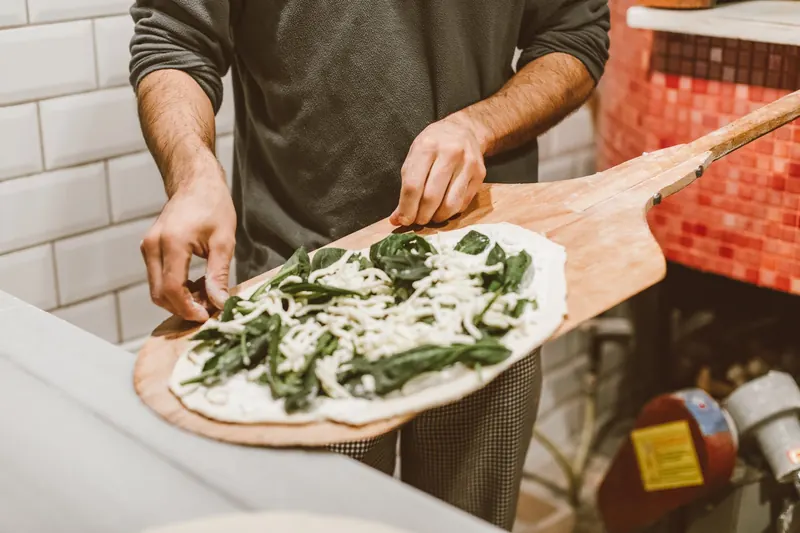
Wooden peels are easier to launch from because dough sticks to them less. Perforated metal peels shed excess flour and are thin enough to slide under a baked pizza.
A turning peel has a small round blade on a long handle so you can rotate the pizza without taking it out of the oven.
Match the peel to the oven: a 14 inch peel will not fit through the mouth of a 12 inch oven.
Guides on this topic
- Pizza stone vs pizza steelPizza stone vs pizza steel: how cordierite and steel store and pass heat in a home oven, which bakes a crisper base, and why neither matches a pizza oven.Comparison
- Why did my pizza stone crack?Cracked pizza stone? Thermal shock, a damp stone or cold dough on a hot floor are the usual causes. See if yours is still safe to use and how to stop it happening.Fix
- Pizza sticking to the peel: causes and fixesPizza stuck to the peel? Use semolina, build fast, keep sauce off the edge and shake test before launch. Simple fixes for a clean slide onto the stone.Fix
- Pizza peel sizes and types explainedWhat size pizza peel do you need? Launching vs turning peels, wood vs perforated metal, and how to match a 12 or 14 inch peel to a 12 or 16 inch oven.Guide
- How to use a turning peelUse a turning peel with small, quick turns to colour the crust evenly next to the flame, then lift and dome the pizza at the end. Simple technique for any oven.How-to
- How to clean a pizza oven stoneClean a pizza oven stone by burning off residue, brushing and scraping when cool, and flipping stains down. Why soap and water are a bad idea for cordierite.How-to