Fix
Pizza sticking to the peel: causes and fixes
Published
Note: This page contains affiliate links. If you buy through them we may earn a commission at no extra cost to you. Learn more
In short
Pizza sticks to the peel when moisture from the dough or sauce glues it to the surface. Dust the peel with semolina or a mix of semolina and flour, build the pizza quickly, keep sauce away from the rim and give the peel a small shake before you go near the oven. If it does not move freely on the bench, it will not launch in the oven.
Products for this job
Compare all 7 productsGeorge Foreman dual fuel: gas or wood pellets, 500°C
Check price on AmazonAffiliate linkDeliVita Diavolo: gas, 450°C, temperature gun included
Check price on AmazonAffiliate linkGino D'Acampo Modena: 14 inch gas oven with thermometer
Check price on AmazonAffiliate link
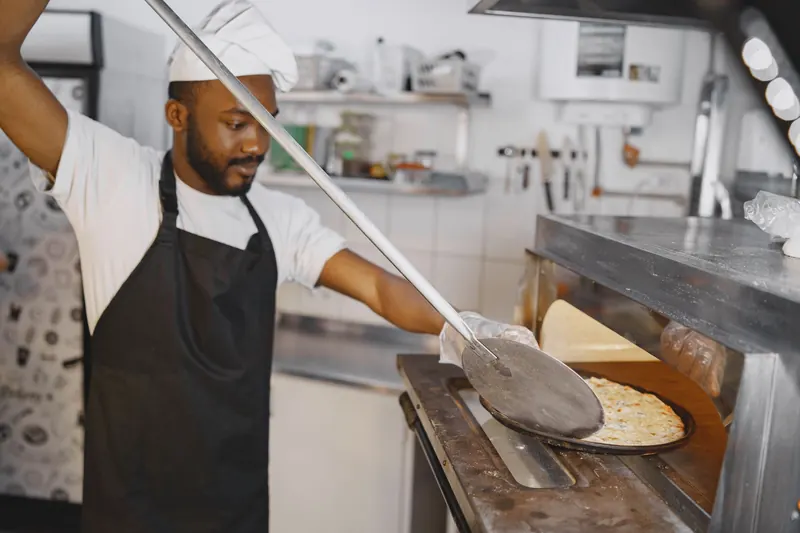
A pizza that folds, tears or sticks halfway onto the stone is the most frustrating moment in pizza making. The good news is that it is nearly always a technique issue that a few habits fix. Dough is wet and slightly sticky by nature. Given time and pressure on a peel, it bonds to the surface. The aim is to put something between the dough and the peel, keep the time short and check before you commit. This guide covers what to dust with, how to build, the right launch movement and what to do when a pizza is already stuck.
Dust with semolina, not just flour
Coarse semolina or rice flour acts like tiny ball bearings under the dough. Plain flour works but absorbs moisture quickly and turns to paste if the pizza sits for long. Many cooks use a mix of semolina and flour. Use a thin, even layer over the area the pizza will sit on, not a thick drift that burns on the stone.
Too much dusting has its own problem: loose semolina scorches on a hot stone and can taste bitter. Tap off the excess before building, and brush the stone between pizzas if it builds up.
Build quickly and keep the edge dry
The longer a dressed pizza sits on the peel, the more water moves from the sauce into the dough and from the dough into the dusting. Have everything ready before you stretch. Put the base on the peel, add toppings in under a minute and launch straight away.
Sauce that runs over the edge onto the peel acts like glue. Keep a clear rim of about 2 cm. Keep loads light: a heavy pizza presses down harder and is harder to slide. Some cooks stretch the dough on the bench, top it there, then slide the peel under it, but that only works with a thin metal peel and practice.
- Stretch the dough on a floured bench, not the peel.
- Dust the peel, then lay the base on it.
- Sauce and top in under a minute.
- Leave a clean rim around the edge.
- Shake test, then launch.
Shake test and launch with confidence
Before you walk to the oven, give the peel a short, sharp shake forward and back. The whole pizza should shift as one piece. If one part does not move, lift that edge gently, throw a pinch of semolina underneath and try again. Do this on the bench, never in front of the open oven.
To launch, rest the front edge of the peel near the back of the stone, tilt it slightly down and then pull the peel back quickly and smoothly. Do not push the pizza forward. A slow, hesitant movement lets the pizza fold or stretch out of shape. Our how to use a turning peel guide covers what happens next.
- 01
Build on a floured peel
Dust the peel with flour or semolina and top the pizza quickly.
- 02
Shake test
Give the peel a small shake: the pizza should slide freely.
- 03
Launch near the back
Tip the peel, slide it in near the back and pull back with one quick move.
- 04
Turn every 20 to 30 seconds
Turn a quarter at a time with a turning peel so no side burns.
Note:The oven mouth and stone are extremely hot. Wear heat-proof gloves, keep sleeves clear of the opening and keep children and pets away while launching.
Wood or metal peel?
Wood peels are slightly porous and hold a thin layer of flour well, so dough tends to stick less to them. They are good for building and launching but thick, so they are awkward for picking a pizza up off the stone. Perforated metal peels are thin and let excess flour fall through the holes, which means less burnt dust on the stone. Some people find dough sticks to them more if they are not dusted well.
Many cooks build on a wooden peel and use a metal or round turning peel in the oven. Our pizza peel sizes explained article covers which type and size suits a 12 or 16 inch oven.
| Peel | Good for | Watch out for |
|---|---|---|
| Wood | Building and launching | Thick edge, can warp if wet |
| Solid metal | Thin edge, easy pick up | Needs good dusting |
| Perforated metal | Launching, less flour on stone | Dough can catch in holes if very wet |
Already stuck? What to do
If the pizza is stuck on the bench, lift the edge with a dough scraper or palette knife and work semolina underneath, a little at a time, all the way round. If it is badly stuck, fold it into a calzone and bake it anyway. Do not try to force a stuck pizza off in the oven, as it will likely fold onto the stone and burn.
If sticking keeps happening, check the dough. Very wet, under-kneaded or warm dough sticks more. Our pizza dough tearing or too sticky guide helps you sort it. If you are choosing an oven with a wider mouth that is easier to launch into, see our best 12 inch pizza oven and best outdoor pizza oven guides.
Frequently asked questions
How do I stop pizza sticking to the peel? Dust with semolina, build quickly, keep sauce off the edge and shake test before launching. If it moves freely on the bench, it will launch.
How do I get a stuck pizza off the peel? Lift the stuck edge with a scraper and work semolina underneath. If it will not free up, fold it into a calzone rather than forcing it into the oven.
What is the best pizza peel for launching? A thin peel that suits your oven opening, dusted well. Wood holds flour well for building, while perforated metal sheds excess flour. Size it to your stone.
Is flour or semolina better on a pizza peel? Semolina usually works better because its coarse grains roll and do not turn to paste as fast. A mix of the two is common.
What you need
- Check price on AmazonAffiliate link
George Foreman dual fuel: gas or wood pellets, piezo ignition
- Check price on AmazonAffiliate link
DeliVita Diavolo: compact 12 inch gas oven, 450°C
From: Best 12 inch pizza ovens
- Check price on AmazonAffiliate link
Jamie Oliver by Tefal: hand-turned rotating stone, 10.9 kg
From: Best portable pizza ovens for camping and taking to friends