Guide
What gas bottle do you need for a pizza oven?
Published
Note: This page contains affiliate links. If you buy through them we may earn a commission at no extra cost to you. Learn more
In short
Most portable gas pizza ovens sold in the UK run on LPG from a standard bottle, and propane is the better choice for year-round use because it keeps working in cold weather. Butane struggles to vaporise near freezing, so the flame weakens on cold evenings. Whatever gas you use, fit a regulator that matches both the gas and the pressure stated in your oven's manual.
Products for this job
Compare all 7 productsJamie Oliver by Tefal: hand-turned rotating stone, 10.9 kg
Check price on AmazonAffiliate linkNutriChef 30 cm: L-shaped burner and 360° rotating stone
Check price on AmazonAffiliate linkMimiuo gas oven with manual rotation handle, 13 inch stone
Check price on AmazonAffiliate link
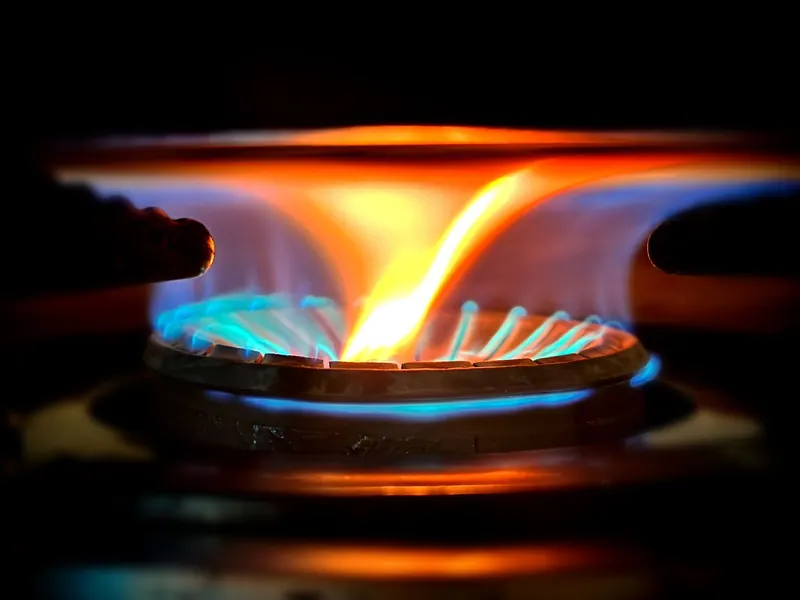
A gas pizza oven needs three things to work safely: the right gas, the right regulator and a sound hose. The choice can be confusing in the UK, where propane and butane bottles sit side by side at the garage forecourt and regulators come in several fittings and pressures. This guide explains the difference between the gases, the common bottle sizes, how to match a regulator to your oven and the standard safety checks every gas oven owner should know.
Propane or butane: the key difference
Both propane and butane are liquefied petroleum gas (LPG), stored as liquid in the bottle and drawn off as vapour. The difference that matters for a pizza oven is how they behave in the cold. Propane boils at a very low temperature, around minus 42°C, so it keeps producing gas on a frosty night. Butane boils at around 0°C, so as the temperature drops towards freezing it vaporises poorly and the flame gets weaker.
For a high-heat appliance used on British autumn and winter evenings, propane is the safer bet. Butane can work on warm summer days, but if your oven struggles to get hot when the weather cools, the gas is a likely cause. Many ovens are designed and rated for propane, so check the manual and the rating plate before using anything else.
| Propane | Butane | |
|---|---|---|
| Cold weather | Works well below freezing | Struggles near 0°C |
| Typical use | Year-round outdoor cooking | Warmer months, indoor heaters |
| Common bottle colour (Calor) | Red, or green for Patio Gas | Blue |
| Regulator | Propane regulator only | Butane regulator only |
Common UK bottle sizes
Bottle sizes are given by the weight of gas they hold, in kilograms. Sizes vary by supplier, but in general propane comes in small bottles of around 5 to 6 kg, a common mid-size of around 13 kg and larger cylinders of around 19 kg and up. Butane is usually sold in bottles of around 4.5 kg, 7 kg and 15 kg. Patio gas bottles, which contain propane, are generally offered in small and medium sizes.
A small bottle is light and easy to carry, which suits a portable oven taken to the beach or campsite. A medium bottle lasts longer between swaps and is the common choice for garden use. How long a bottle lasts depends on the burner, how high you run it and how long each session is, so check the maker's guidance rather than relying on a general figure.
Matching the regulator to the gas and the oven
The regulator reduces the high pressure in the bottle to the steady low pressure the oven's burner is designed for. It must match two things: the type of gas and the pressure your oven needs. Propane and butane regulators are not interchangeable, and they usually have different fittings. In the UK, propane bottles commonly take a screw-on regulator, while many butane bottles use a clip-on type, but fittings vary between suppliers.
Your oven's manual and rating plate state the gas and pressure, given in millibars (mbar). Some ovens come with a UK regulator and hose in the box, and several listings in our best gas pizza oven guide say so. Others, such as the Ooni Koda 12 listing, state that the regulator and hose are not included. If you need to buy one, take the manual to the supplier and ask for the matching regulator rather than guessing.
- 1
Read the manual and rating plate for the gas type and pressure.
- 2
Buy a regulator for that gas, at that pressure, with the right fitting for your bottle.
- 3
Use the hose supplied or one the maker approves, kept short and free of kinks.
- 4
Fit the regulator to the bottle and tighten as the instructions describe.
- 5
Do a leak test before lighting, every time you connect a bottle.
Storage and leak checks
Keep gas bottles upright, outdoors, in a well-ventilated spot away from heat, drains and cellars, since LPG is heavier than air and collects in low places. Never store bottles in the house, and keep spare bottles away from the oven while it is lit.
Before each session, check the hose for cracks, stiffness or wear and make sure the regulator is not damaged. Brush soapy water over every joint with the bottle valve open and the oven off. Bubbles mean a leak: turn off the bottle, retighten or replace the part and test again. When you finish cooking, turn off the gas at the bottle first, then at the oven.
Note:Use a gas pizza oven outdoors only, never indoors or in a tent, awning, caravan or garage. Check the hose and regulator, do a soapy-water leak test, keep the bottle upright and outdoors away from heat, turn off at the bottle and follow the manual. If you suspect a gas leak, call the National Gas Emergency Service on 0800 111 999. Use a Gas Safe registered engineer for any fixed gas work.
When the flame is weak or will not light
A weak, lazy flame on a cold evening often points to butane, a nearly empty bottle or a regulator that does not match the oven. A bottle that has frosted on the outside is drawing gas faster than it can vaporise. Swap to propane, try a fuller bottle and check that the regulator pressure matches the manual.
If the oven will not light at all, check the bottle valve is open, the hose is not kinked and the igniter sparks. Our gas pizza oven not lighting guide covers the full checklist, and how long pizza ovens take to heat up explains what slows them down in cold weather.
Frequently asked questions
What gas bottle do I need for an Ooni Koda? Check the manual for your model. Ooni gas ovens sold in the UK are generally set up for LPG, and the maker's site lists the regulator to use. Propane is the better choice for cold weather.
Can I use butane in a pizza oven? Only if the manual says the oven is suitable for butane and you fit a butane regulator. It works poorly near freezing, so propane is usually the better choice in the UK.
Is patio gas the same as propane? Patio gas bottles contain propane, but they may use a different fitting from standard propane bottles. Make sure the regulator fits the bottle and matches the oven.
Can I connect a pizza oven to mains gas? Not unless the maker sells a version built for natural gas. LPG and natural gas ovens use different burners and pressures, and any fixed gas connection must be done by a Gas Safe registered engineer.
What you need
- Check price on AmazonAffiliate link
Jamie Oliver by Tefal: hand-turned rotating stone, 10.9 kg
From: Best gas pizza ovens
- Check price on AmazonAffiliate link
George Foreman dual fuel: gas or wood pellets, piezo ignition