Guide
How long do pizza ovens take to heat up?
Published
Note: This page contains affiliate links. If you buy through them we may earn a commission at no extra cost to you. Learn more
In short
Most portable gas and pellet pizza ovens are stated by their makers to heat up in roughly 10 to 20 minutes. Gas ovens in our data quote 10 to 20 minutes and the pellet ovens 10 to 18 minutes. On a cold, windy UK evening allow longer, and check the stone with an infrared thermometer rather than trusting the clock. Once hot, a thin pizza cooks in about 60 to 90 seconds.
Products for this job
Compare all 7 productsJamie Oliver by Tefal: hand-turned rotating stone, 10.9 kg
Check price on AmazonAffiliate linkNutriChef 30 cm: L-shaped burner and 360° rotating stone
Check price on AmazonAffiliate linkMimiuo gas oven with manual rotation handle, 13 inch stone
Check price on AmazonAffiliate link
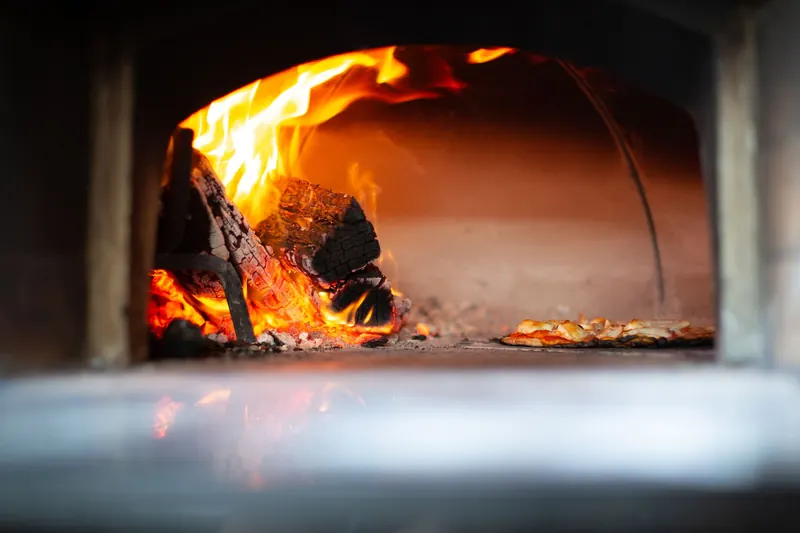
Heat-up time is one of the first things people ask about an outdoor pizza oven, because it decides whether a quick weeknight pizza is realistic. The figures below are the times each maker gives in its product listing, so treat them as best-case numbers on a mild, still day. This guide puts those stated times side by side, explains why the stone takes longer than the air above it, and covers what slows an oven down when the weather turns cold, damp or breezy.
Makers' stated heat-up times
The table lists heat-up times stated by the makers for ovens that appear in our buying guides. They come from the product listings, not from our own measurements, and each maker defines ready slightly differently. Some quote the time to reach a target temperature such as 450°C or 500°C, others simply say the oven is ready to cook. Where a range is given, the lower figure assumes ideal conditions.
Ovens not listed here, including Gozney models and the larger Ooni ovens, are not in our product data, so we have not quoted figures for them. For those, the maker's own spec page on gozney.com or ooni.com gives the official heat-up time.
| Oven (brand and model) | Fuel | Stated heat-up |
|---|---|---|
| Ooni Koda 12 | Gas | 15 minutes |
| DeliVita Diavolo | Gas | 20 minutes to 450°C |
| Gino D'Acampo Vesuvio 14 inch | Gas | 15 minutes |
| Gino D'Acampo Modena 14 inch | Gas | 15 minutes |
| Mimiuo Tisserie G-Oven | Gas | 10 to 15 minutes to 500°C |
| Mimiuo G-Oven | Gas | About 10 to 15 minutes |
| NutriChef 30.48 cm portable gas oven | Gas | 10 to 15 minutes |
| DOBADN Q Pizza | Gas | 10 to 15 minutes |
| George Foreman 12 inch wood pellet oven | Pellets | 18 minutes |
| BIG HORN OUTDOORS 12 inch pellet oven | Pellets | 18 minutes |
| Mimiuo Classic W-Oven | Wood or pellets | Under 10 minutes to 500°C |
| Mimiuo W-Oven with automatic rotation | Wood or pellets | About 10 to 15 minutes |
| Mimiuo upgraded wood and charcoal oven | Wood or charcoal | Under 15 minutes |
Why the stone matters more than the air
A pizza oven bakes from two directions: heat from the flame rolls over the dome and cooks the top, while the hot stone cooks the base. The air and the dome heat up fast. The stone is a thick slab of cordierite or similar material, so it takes longer to soak up heat. A built-in dial thermometer usually reads the air or the dome, which can show a high number while the stone is still too cool.
If you launch a pizza onto a stone that is not hot enough, the top chars before the base is cooked. An infrared thermometer pointed at the centre of the stone is the simplest check. Many cooks wait until the stone reads somewhere around 400°C or more for a thin Neapolitan style pizza, and a little lower for thicker bases. Our pizza oven temperature guide covers the targets for different styles.
What slows an oven on a cold UK evening
The stated times assume decent conditions. A British autumn or winter evening rarely provides them. Expect to add several minutes, sometimes doubling the wait, when one or more of these apply.
- Wind blowing into the mouth of the oven, which strips heat from the stone and can push the flame about.
- A cold oven that has been stored in a shed or garage, so the metal body and stone start well below room temperature.
- A damp stone after rain or a humid spell, which has to dry out before it gets properly hot.
- Butane gas in cold weather, which vaporises poorly near freezing and gives a weak flame. Propane copes much better.
- Wet wood or pellets that have taken on moisture, which burn cooler and smokier.
- Opening the door or checking the oven often, which lets heat out each time.
Note:Use any gas or fuel-burning oven outdoors only, on a stable heat-proof surface, well away from fences, sheds and overhanging branches. Never leave a lit oven unattended and keep children and pets clear.
Getting it hot faster
A few habits make a real difference. Position the oven so its back faces the wind, or use a solid windbreak a safe distance away. Light the oven at full heat and leave it alone until the stone reads hot, then turn the flame down a little before launching. On a gas oven, propane is the better choice for cold nights. Our guide to what gas a pizza oven needs explains why.
Between pizzas, give the stone a minute or two at full heat to recover, because each pizza pulls heat out of it. With a wood or pellet oven, keep feeding small amounts of dry fuel so the flame stays lively. If your oven never seems to get properly hot even in good weather, see pizza oven not getting hot enough for the common causes.
How long does the pizza itself take?
Once the stone is hot, the makers in the table quote cooking times of roughly 60 to 90 seconds for a thin 12 inch pizza at full heat. Turning the pizza every 20 to 30 seconds with a turning peel helps it cook evenly, unless the oven has a rotating stone. Thicker New York or pan style pizzas need a lower flame and a few minutes.
A domestic kitchen oven tops out far lower, often at about 250°C, so a pizza on a preheated stone or steel usually takes several minutes rather than seconds. Our comparison of a pizza oven versus a kitchen oven explains the difference in crust. If you want fast heat-up without fuel at all, electric countertop models are covered in our best electric pizza oven for indoors guide.
Frequently asked questions
How long does a Gozney take to heat up? Gozney ovens are not in our product data, so we do not quote a figure here. Check the official spec page on gozney.com for the maker's stated time, and allow extra on a cold or windy day.
Is 15 minutes long enough to preheat a gas pizza oven? Often, on a mild still day. In cold or wind it may take longer. Check the stone with an infrared thermometer rather than relying on the clock or the lid dial.
Do pellet ovens heat up slower than gas? The pellet ovens in our data state 10 to 18 minutes, similar to gas. In practice pellets need steady feeding and dry fuel, so they can take longer if the fire is not managed.
How long should I wait between pizzas? Give the stone a minute or two at full heat to recover after each pizza, longer if you are cooking several in a row or the weather is cold.
What you need
- Check price on AmazonAffiliate link
Jamie Oliver by Tefal: hand-turned rotating stone, 10.9 kg
From: Best gas pizza ovens
- Check price on AmazonAffiliate link
Mimiuo upgraded oven: wood or charcoal, 33 x 33 cm stone
- Check price on AmazonAffiliate link
DeliVita Diavolo: compact 12 inch gas oven, 450°C
From: Best 12 inch pizza ovens