Guide
Pizza oven temperature guide
Published
Note: This page contains affiliate links. If you buy through them we may earn a commission at no extra cost to you. Learn more
In short
For Neapolitan pizza, many cooks aim for a stone of about 400 to 450°C and a bake of 60 to 90 seconds. New York style suits about 290 to 330°C for 4 to 7 minutes, and pan pizza bakes well at about 230 to 260°C. Measure the stone with an infrared thermometer, because the air temperature in the dome can read much higher than the floor.
Products for this job
Compare all 7 productsGeorge Foreman dual fuel: gas or wood pellets, 500°C
Check price on AmazonAffiliate linkDeliVita Diavolo: gas, 450°C, temperature gun included
Check price on AmazonAffiliate linkGino D'Acampo Modena: 14 inch gas oven with thermometer
Check price on AmazonAffiliate link
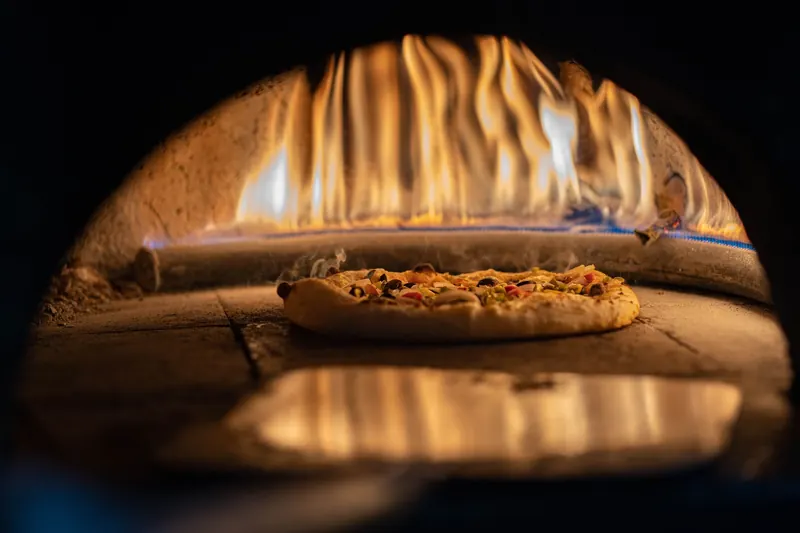
Temperature is the biggest single factor in how a pizza turns out. Too cool and the base is pale and bready. Too hot for the dough and the base burns before the top is done. Portable outdoor ovens can reach far higher temperatures than a kitchen oven, which is why they suit thin Neapolitan pizza, but not every style needs that heat. This guide gives working temperature ranges for the main styles, explains the difference between stone and air temperature and shows how to use an infrared thermometer properly. Treat the figures as starting points, then adjust for your oven and dough.
Stone temperature versus air temperature
A pizza oven cooks in two ways. The stone heats the base by contact, and the hot air and flame across the dome cook the top. These two temperatures are rarely the same. Early in a preheat, the air can be very hot while the stone lags behind. After a long cook with the flame high, the stone can overshoot.
Many built-in gauges read the air near the dome. That is useful, but the stone is what decides whether your base is pale, perfect or burnt. Most experienced cooks watch the stone number and judge the top by eye. If the base is burning while the top is pale, see pizza burnt underneath but raw on top.
Temperatures by pizza style
Neapolitan style dough is usually just flour, water, salt and yeast. With no sugar or oil, it can take very high heat and bakes in about a minute with a puffy, spotted crust. New York style dough often includes oil and sometimes sugar, which brown faster, so it needs a cooler stone and a longer bake to cook through. Pan and Detroit style pizzas bake in a tin, which shields the base, and suit kitchen oven temperatures.
These ranges are widely used starting points, not rules. Thicker bases and heavier toppings need lower heat and more time. Our dough calculator helps you scale a simple Neapolitan style dough.
| Style | Stone | Bake time |
|---|---|---|
| Neapolitan | About 400 to 450°C | 60 to 90 seconds |
| New York style | About 290 to 330°C | 4 to 7 minutes |
| Thin and crispy home style | About 260 to 300°C | 5 to 8 minutes |
| Pan or Detroit style in a tin | About 230 to 260°C oven | 12 to 15 minutes |
| Flatbreads | About 350 to 400°C | 1 to 2 minutes |
How to use an infrared thermometer
An infrared thermometer reads the surface temperature of whatever you point it at. Many makers, Ooni included, sell their own, and general purpose models also work if their range goes high enough, ideally to 500°C or more. Check the maximum on the label.
Aim it straight down at the centre of the stone from a short distance, so the spot it reads is on the stone rather than the walls. Take a second reading near the back, closest to the flame. Do not trust a reading of the dome or flame for the base. Shiny metal surfaces give unreliable readings, so stick to the stone.
- 1
Preheat for at least 20 to 30 minutes, longer in cold weather.
- 2
Point the thermometer at the centre of the stone and read.
- 3
Check near the back as well.
- 4
Adjust the flame or fire to reach your target.
- 5
Read again just before each launch.
Note:Stay well back from the opening when taking readings, wear heat-proof gloves and never leave a lit oven unattended. Use gas and wood ovens outdoors only, away from fences, sheds, overhanging branches and the house, as fuel-burning ovens produce carbon monoxide.
Keeping the temperature steady
Each pizza draws heat from the stone. Give it a few minutes between pizzas with the flame high or the fire fed so the stone recovers. In a wood oven, add small dry pieces of wood often to keep a rolling flame. In a gas oven, many cooks turn the flame down just before launching and back up after, which keeps the base from burning while the dome stays hot.
If your oven struggles to get hot, see pizza oven not getting hot enough and pizza oven heat up times.
Does the oven type matter?
Yes. Portable gas and wood ovens can usually reach Neapolitan temperatures. Many electric indoor pizza ovens reach high temperatures too, though their heat behaves differently, and a kitchen oven with a stone or steel tops out much lower, so suits New York and pan styles better. Our pizza oven vs kitchen oven article compares them.
To find an oven that suits your style, see our best outdoor pizza oven, best gas pizza oven and best electric pizza oven for indoors guides.
Frequently asked questions
What is the best temperature for a wood-fired pizza oven? For Neapolitan pizza, a stone of about 400 to 450°C is a common target. Thicker styles work better cooler.
What temperature should a pizza stone be? It depends on the style: about 400 to 450°C for Neapolitan, about 290 to 330°C for New York style. Measure it with an infrared thermometer.
Do I need an Ooni temperature gun? You need an infrared thermometer that reads high enough, ideally to 500°C. A maker's own model or a general purpose one with a suitable range both work.
Why is the dome hotter than the stone? Hot air and flame heat the dome quickly, while the dense stone takes longer to warm. Preheat for longer and measure the stone before launching.
What you need
- Check price on AmazonAffiliate link
George Foreman dual fuel: gas or wood pellets, piezo ignition
- Check price on AmazonAffiliate link
Jamie Oliver by Tefal: hand-turned rotating stone, 10.9 kg
From: Best gas pizza ovens
- Check price on AmazonAffiliate link
Sage Smart Oven Pizzaiolo: 400°C, Element iQ, 2,250 W