Guide
How long does pizza dough keep in the fridge?
Published
Note: This page contains affiliate links. If you buy through them we may earn a commission at no extra cost to you. Learn more
In short
Homemade pizza dough usually keeps for about 2 to 3 days in the fridge, and that is also the window most cold-proving recipes use. For longer, freeze it in individual balls, where it is best used within about 3 months. Shop-bought fresh dough should be used by the date on the pack. If dough smells sour or mouldy, looks grey or has mould on it, throw it away.
Products for this job
Compare all 7 productsGeorge Foreman dual fuel: gas or wood pellets, 500°C
Check price on AmazonAffiliate linkDeliVita Diavolo: gas, 450°C, temperature gun included
Check price on AmazonAffiliate linkGino D'Acampo Modena: 14 inch gas oven with thermometer
Check price on AmazonAffiliate link
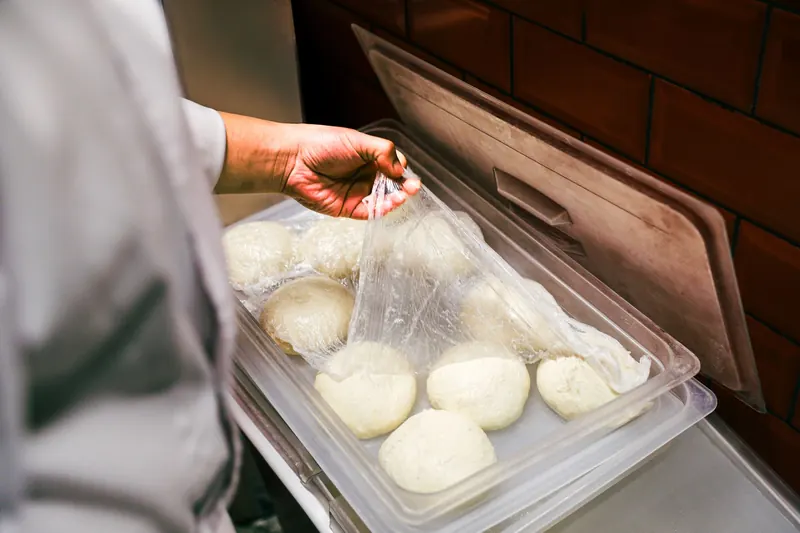
Pizza dough is a living thing: the yeast keeps working slowly even in the fridge. That is useful, because a slow cold prove develops flavour and makes the dough easier to stretch. But the clock is running. Leave it too long and the yeast exhausts its food, the dough goes slack and sour, and eventually it is not fit to eat. This guide covers how long dough keeps in the fridge and freezer, how to store it, and the signs that it is past its best. It is general guidance; always follow the use-by date and storage instructions on shop-bought dough.
Fridge storage times at a glance
Keep your fridge at 5°C or below, which is the standard UK food safety advice. Store dough in an airtight container or wrapped well, on a shelf away from raw meat. These are typical, conservative windows for homemade yeast dough.
| Where | Typical window | Notes |
|---|---|---|
| Room temperature | A few hours for proving only | Do not store dough out overnight |
| Fridge, 5°C or below | About 2 to 3 days | Best flavour often after 24 to 72 hours |
| Freezer | About 3 months for best quality | Freeze as individual balls |
| Shop-bought fresh dough | Use by the date on the pack | Follow the pack instructions |
Cold proving: the useful window
Many pizza recipes deliberately prove the dough in the fridge for 24 to 72 hours. The cold slows the yeast, so flavour develops slowly and the gluten relaxes, giving a dough that stretches easily and bakes with a lighter crust. Our Neapolitan-style pizza dough uses this method with a small amount of yeast, about 0.2 % of the flour weight, so it does not over-prove.
Dough made with more yeast moves faster and is best used sooner, often within a day or two. If you plan to keep dough for the full three days, use less yeast. The dough calculator lets you set the yeast percentage for your batch.
Freezing dough balls
Freezing pauses the yeast rather than killing all of it, though some activity is lost. Dough frozen for a long time may rise less and taste flatter. Thaw it in the fridge, not on the worktop, and do not refreeze dough that has thawed.
- 1
Make and knead the dough as normal, and give it its first rest.
- 2
Divide and shape into balls at the weight you need; see pizza dough ball sizes.
- 3
Lightly oil each ball and wrap it individually, or place it in a freezer bag with the air pressed out.
- 4
Label with the date and weight, and freeze flat so they freeze quickly.
- 5
To use, thaw in the fridge overnight, still wrapped.
- 6
Bring to room temperature for two to four hours before stretching.
Signs dough is past its best
Some changes are only about quality. A slight beery or alcoholic smell is normal for dough after a long cold prove. If the dough is very slack, sticky, collapses when you lift it or has large bubbles all over, it is over-proved. It may still bake, but expect a flat, dense crust with poor colour.
Other signs mean it should go in the bin. Throw dough away if you see mould of any colour, if it has a strong sour or unpleasant smell, if it has turned grey and slimy, or if it has been left at room temperature for many hours. If in doubt, throw it out. Do not cut mould off and use the rest.
- Normal: mild yeasty or beery smell, a few small grey patches where the surface dried
- Over-proved: very slack, sticky, collapses, large bubbles
- Discard: mould, strong sour or off smell, slimy texture, past the use-by date
Getting the best from stored dough
Use containers with room for the dough to rise, and a lid to stop the surface drying into a skin. A light coat of oil helps too. Take the dough out of the fridge a few hours before cooking so it relaxes; cold dough fights back when stretched and tears easily. See pizza dough tearing or sticky if you have trouble.
Well-rested dough cooks best on a properly hot stone. Our pizza oven temperature guide covers the right heat for each style, and the best outdoor pizza ovens and best electric pizza ovens for indoors guides list current ovens.
Frequently asked questions
Can pizza dough stay in the fridge for a week? It is not a good idea. Most homemade dough is best used within about 2 to 3 days. After that, quality drops and the risk of it spoiling increases.
Can I leave pizza dough out overnight? Not for storage. Leave dough at room temperature only for proving or warming up before use, then cook it or refrigerate it.
How do I defrost frozen pizza dough? Thaw it overnight in the fridge, still wrapped, then let it come up to room temperature for a few hours before stretching.
Why does my dough smell of alcohol? Yeast produces a little alcohol as it ferments. A mild beery smell is normal after cold proving. A strong sour or unpleasant smell is a sign to throw it away.
What you need
- Check price on AmazonAffiliate link
George Foreman dual fuel: gas or wood pellets, piezo ignition
- Check price on AmazonAffiliate link
Sage Smart Oven Pizzaiolo: 400°C, Element iQ, 2,250 W
- Check price on AmazonAffiliate link
DeliVita Diavolo: compact 12 inch gas oven, 450°C
From: Best 12 inch pizza ovens